If you’re seeing this article before Moon Joy: The Launch of Artemis II, I suggest you go back and read that first. This is week two of NASA’s Moon Joy June challenge, and the theme this week is the Moon.
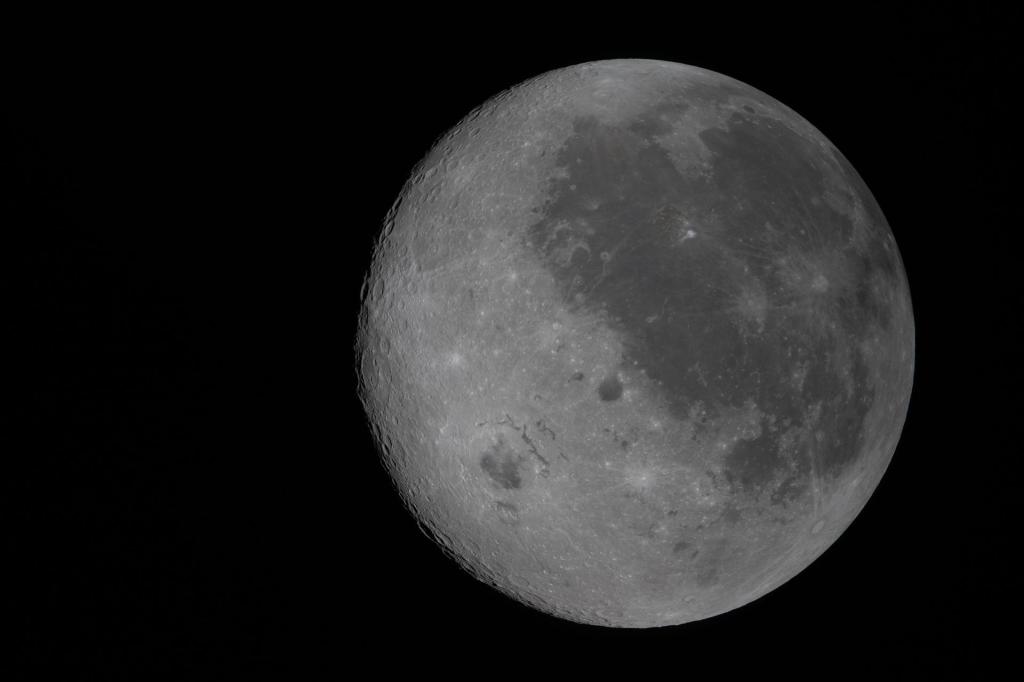
The Moon is a most wonderous thing. You look up at the night sky and every night it’s there in some form. Even on the nights you can’t see it, it’s still with us. Not just tied to the Earth, but influencing it, and by association, us. And no, I don’t mean werewolves… When the Moon is closer to Earth, the tides are bigger, making surfers and beach goers happier. When the Moon is full every child looks up in wonder. Many cultures throughout time have prayed to the Moon, and woven the Moon into their stories of creation and protection. From the namesakes of the Moon missions, Apollo and Artemis, to the Egyption god Khonsu, and the Aztec deity Mētztli, the Moon is a constant across many cultures and religions. The Moon has also acted as a celestial calendar and weather forecaster for Indigenous peoples, guiding them on seasonal changes, the passing of time, and cultural traditions and practices. Humans chose to try and visit our closest neighbour because we were so in awe, influencing people’s dreams and lives. People that were just children when humans first landed on the Moon became inspired. They became the people behind the scenes of future space missions, the people behind the scenes of Artemis II, the first manned mission to the Moon since 1972.
So how did the Moon first come to be? And why is it tied to the Earth?
The moon is gravitationally bound to the Earth due to it’s proximity to the larger mass. Simply, there isn’t a larger mass close enough to the Moon to pull it away from the Earth. The Moon formed during early Earth, about 4.5 billion years ago. Essentially, a large body of rock not big enough to be a planet yet, known as a protoplanet, collided with the Earth. This sent vapourised rock and debris into space, which then coalesced and formed the Moon. This is known as the Giant Impact Hypothesis. You can watch a video explaining this in more detail here.
So, in July 1969, man first landed on the Moon, shortly followed by five more landings between November 1969 and December 1972. The Apollo missions were to prove we could go to the Moon. As John F. Kennedy famously said, “we choose to go to the Moon in this decade and do the other things, not because they are easy, but because they are hard.” For both the USA and the USSR, the dominent powers in the Space Race, it was about showing a technological capability to go further than humans had ever gone before. But once it was achieved, what was the point in continuing to go back to the Moon? There was significant cost involved, shifting political priorities, and a supposed declining public interest. So, NASA moved onto the Space Shuttle program, a program designed to provide reusable spacecraft with the purpose of launching satellites, such as the Hubble Space Telescope, into space. The Space Shuttle program was also essential for assembling the International Space Station, maintaining satellites once they were in space, and performing scientific experiments in micro-gravity. Essentially, human’s proved we could go to the Moon, but at the time decided there were more important things we should be doing in space. And for the last few decades, this has been true.
So why go back now? With the inevitability of the International Space Station retiring by the end of 2030, NASA and all those involved in space exploration and science must look to the next step. Ultimately, the goal is to go to Mars. But getting to Mars is an unfathomably enormous task, and it must be broken down into smaller steps if it is to be achieved. Thus, NASA want to establish a sustained human presence on the Moon. The Moon can then be used as a stepping stone to Mars. It can hold equipment and fuel, and act as a station between Earth and Mars, allowing, if timed correctly, for a much shorter travel time to Mars. The Moon can also be used as a training ground, allowing for the testing of long term habitation equipment and procedures in an environment that is closer and less hospitable than Mars.
But before we can land on the Moon and set up a lunar base, NASA must prove it is possible to go back to the Moon. It hasn’t been done in a long time, thus the procedures and maneuvers involved in getting to the Moon, landing, and returning to Earth have to be practiced. And the first thing to test before landing on the Moon is, can we once again reach the Moon and travel back. Thus, this mission to the Moon focused on a lunar fly by.
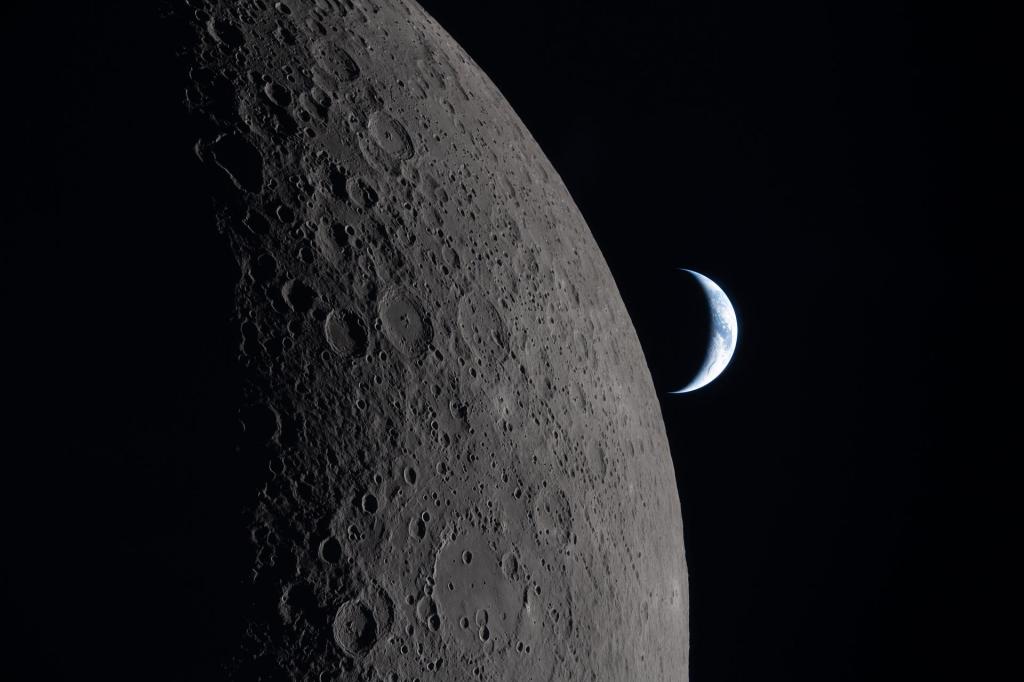
This seemingly basic, but essential mission, brought about more discoveries and more observations. But, rather than just flying around the Moon and ticking the box to say we can do it, the astronauts were also tasked with recording what they saw. This was the first time an entire crew was sent with the dedicated mission of recording their observations of the far side of the Moon. And of course a reason for this was to establish if the far side of the Moon could be used as a lunar base.
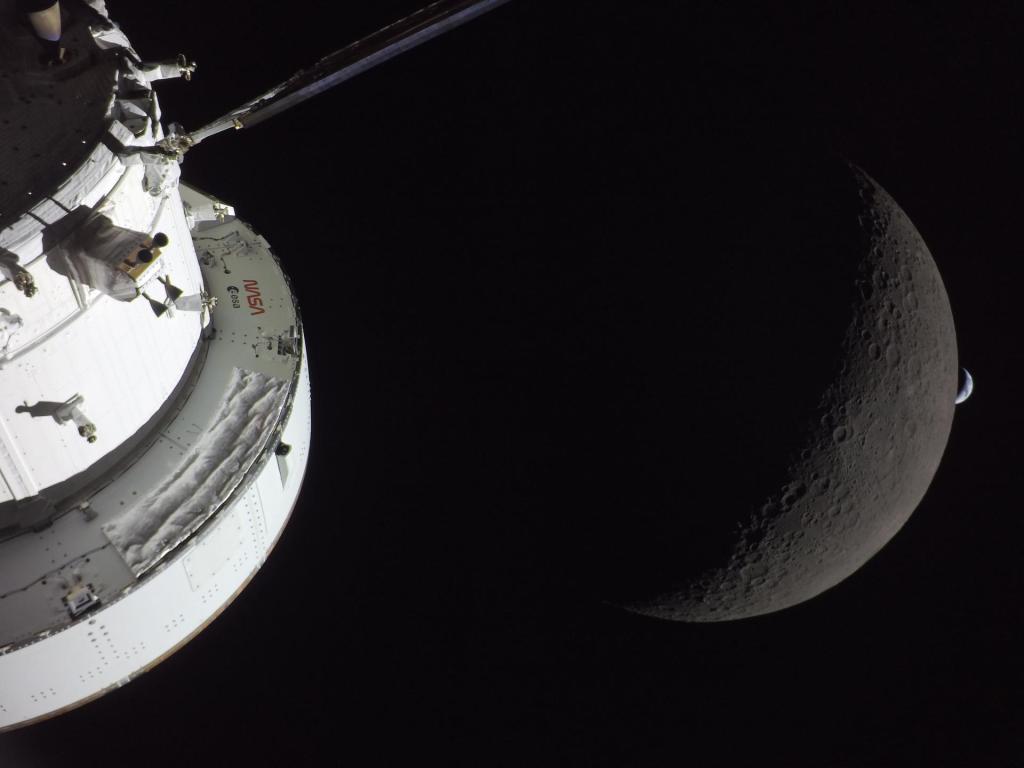
This mission also resulted in two new named craters. Integrity Crater, and Carroll Crater. Integrity Crater was named in honor of the Artemis II capsule that took the astronaut’s all the way around the Moon and back. Carroll Crater was named in honor of Commander Reid Wiseman’s wife, Carroll Taylor Wiseman, who passed away in 2020 from cancer. The astronaut’s could have called the crater’s anything they wanted. Yet they chose to name them in a way that honored who and what was important to them. As a team they recognised the significance of love and unity.
The way these crater’s were named truly encapsulates the energy of the mission. It wasn’t just about going to the Moon and recording some information. These astronauts were taught poetry to help them record the beauty of what they saw. The catch phrase of the mission became “Copy, Moon Joy”. This mission to the Moon moved beyond what NASA sought to do with the Apollo missions. Whilst the Apollo missions were about proving humans could go to the Moon to show the world the power and strength of technological advancement, the Artemis missions are about going to the Moon because we are genuinely curious and in awe of what we as humans can do and experience, and we want to see if we can go further than we ever have before.
The Moon will always hold a special place in the heart of the human race. Every human on Earth looks up at the same night sky and experiences the beauty of the same Moon. It unites us, and inspires us, and humbles us by reminding us that we are just a pale blue dot in the vast expanse of a much bigger universe.
 SciencewithCJ
Leave a comment